The Old Potter and the Golden Cracks
Listen to story
--:--
May 16, 2026
kintsugiimperfectionbeautywisdom
Little Maja ran to her grandpa Otto's workshop every day after school. She loved watching his skilled hands turn pieces of wood into beautiful, functional objects.
One rainy afternoon, as the rain drummed on the tin roof of the workshop, Maja noticed something intriguing. Otto was sitting in his chair, with Jole, their loyal dog, lying on the floor beside him, while Loli, their cat, sat on the windowsill, observing the outside world.
“Grandpa Otto,” Maja asked, “can you tell me a story?”
Otto smiled, wiped his hands on his apron, and sat down beside her. “Of course, Maja. Do you know the story of the old potter and his cracked pot?”
Maja raised her eyebrows curiously, and Otto continued...
“Once upon a time, there was an old potter in a small village,” Otto began, carefully watching Maja. “He was known for his skill in crafting perfect pots. One day, he created a pot that was his masterpiece — flawless, without a single blemish. He took it to a big exhibition in the city, where everyone was amazed. They offered him a lot of money, enough to fulfill his dreams.”
“And what happened?” Maja's eyes were wide open.
“On his way home, the potter tripped, and the pot fell to the ground, cracking in seven places. Sitting there on the road, he cried like a child, thinking everything was ruined.”
Otto paused his story to smile at Maja, while Jole stretched out on the floor, oblivious to the moment's importance.
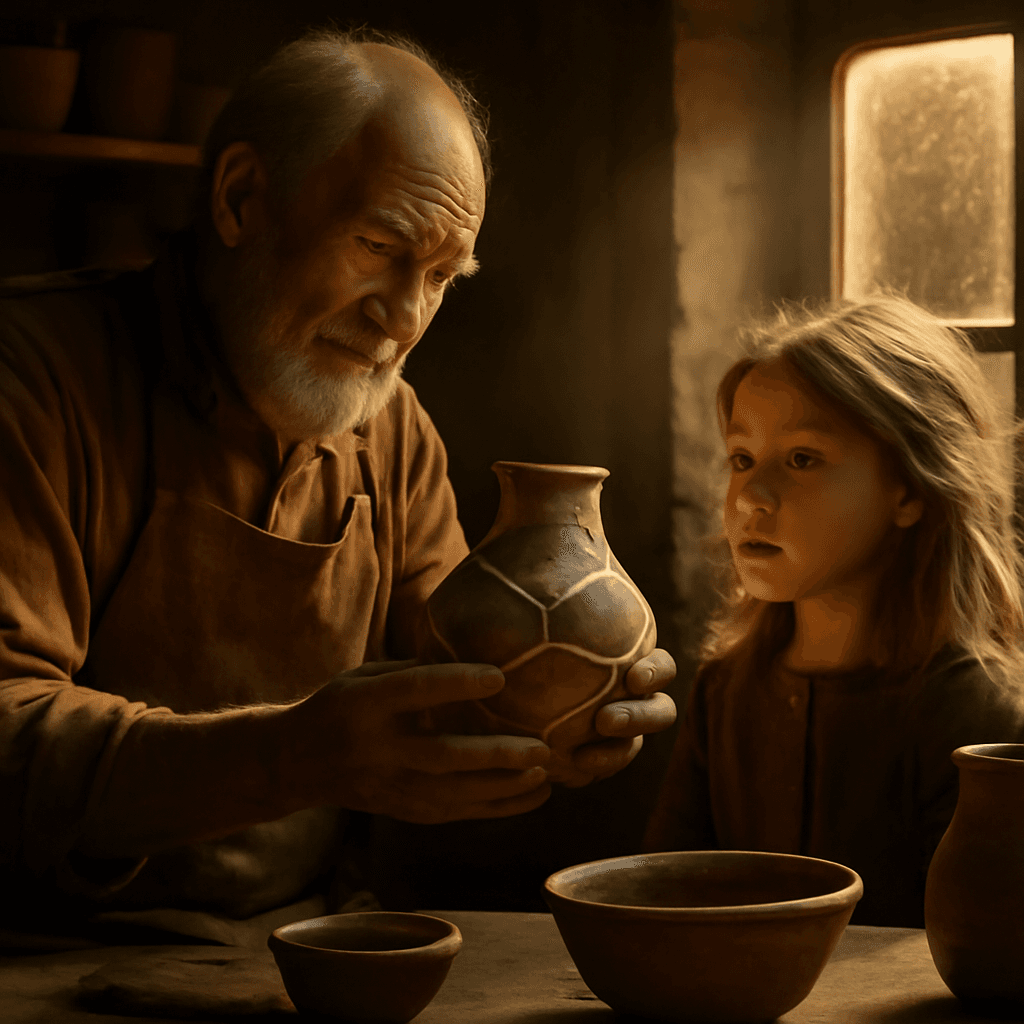
“But instead of throwing the pot away, he decided to use an ancient Japanese technique called kintsugi. He filled each crack with molten gold. The cracks turned into golden lines that made the pot more beautiful than ever.”
Maja gently traced imaginary golden lines in the air. “So, the pot is now more beautiful and valuable?”
“Far more beautiful. And far more valuable. But not just the pot, Maja. The same goes for people,” Otto said, looking at her with affection. “Your friend Ana, who called you strange today because you read books instead of staring at your phone — she does that because she doesn't understand yet. But your cracks, your uniqueness, your silence while everyone else is shouting — those are the places where one day, gold can shine.”
That evening, for the first time, Maja
Stories are AI-generated with editorial curation.