
Once upon a time in Vallumora
Warmly written, beautifully read, made with love for the families who keep coming back.
Life lessons through storytelling
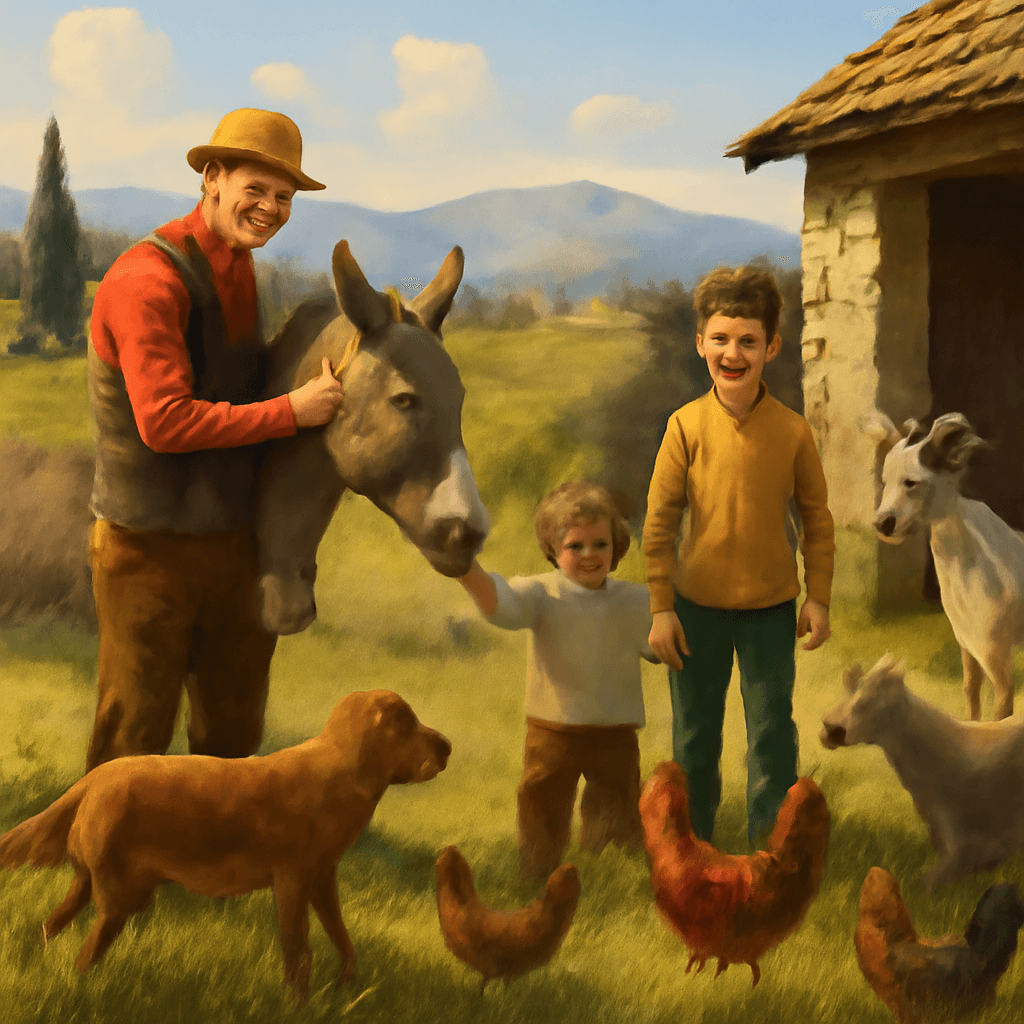
Pino and Vito jumped out of the car and ran towards Luca's farm. The tall grass glowed yellow-green under the sun, and somewhere in the distance, the bray of the donkey Berto could be heard. "Why does the donkey shout so loudly?" asked Vito, his eyes wide. Pino chuckled as Luca waved from the barn door. "Come on, I'll show you everything!" shouted Luca. But Jole stood frozen under the old fig tree, staring at the approaching goat. "Dad, what about Jole?" Pino asked.
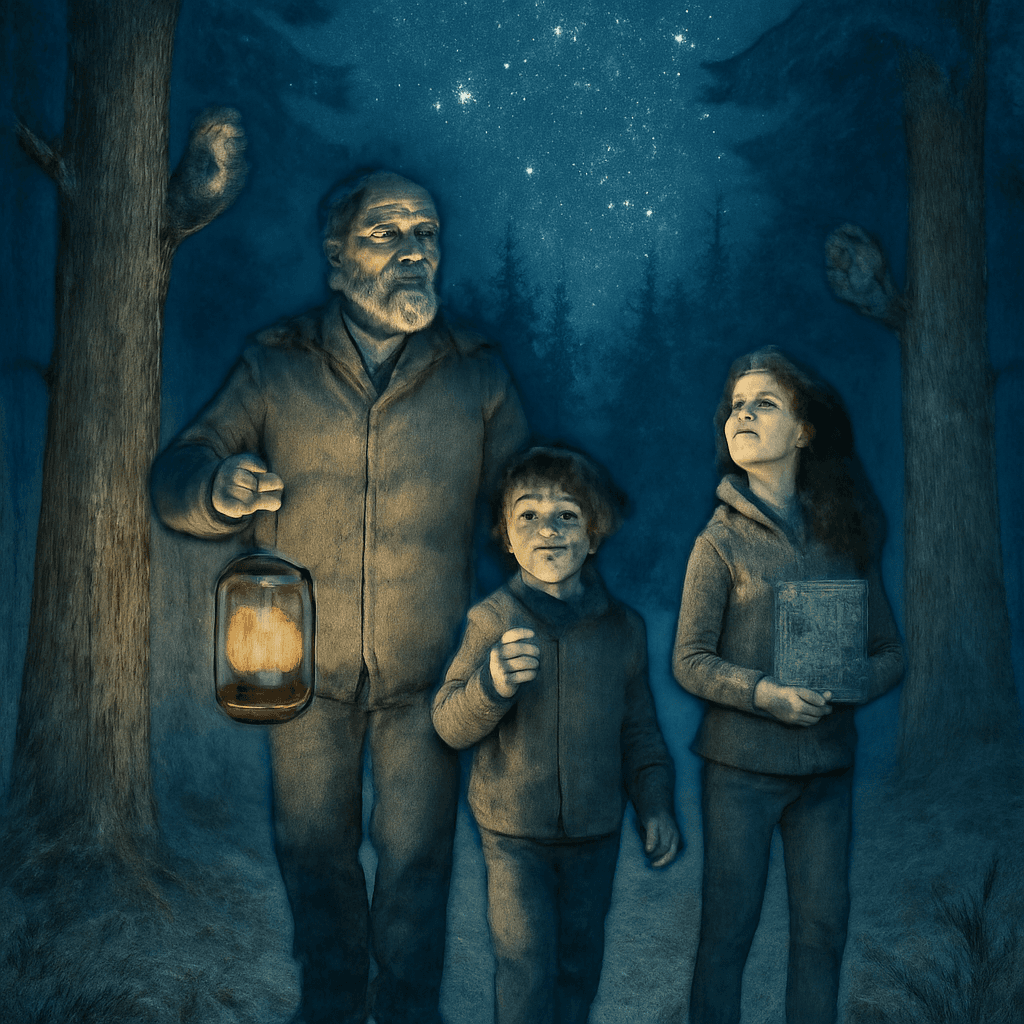
Maja stood beneath the stars, sketching their sparkle in her notebook, while Pino wrestled with his fear. Gabriel led them deeper into the forest, where the noises grew more mysterious and unfamiliar. Suddenly, a strange sound filled the air, stopping Pino in his tracks.
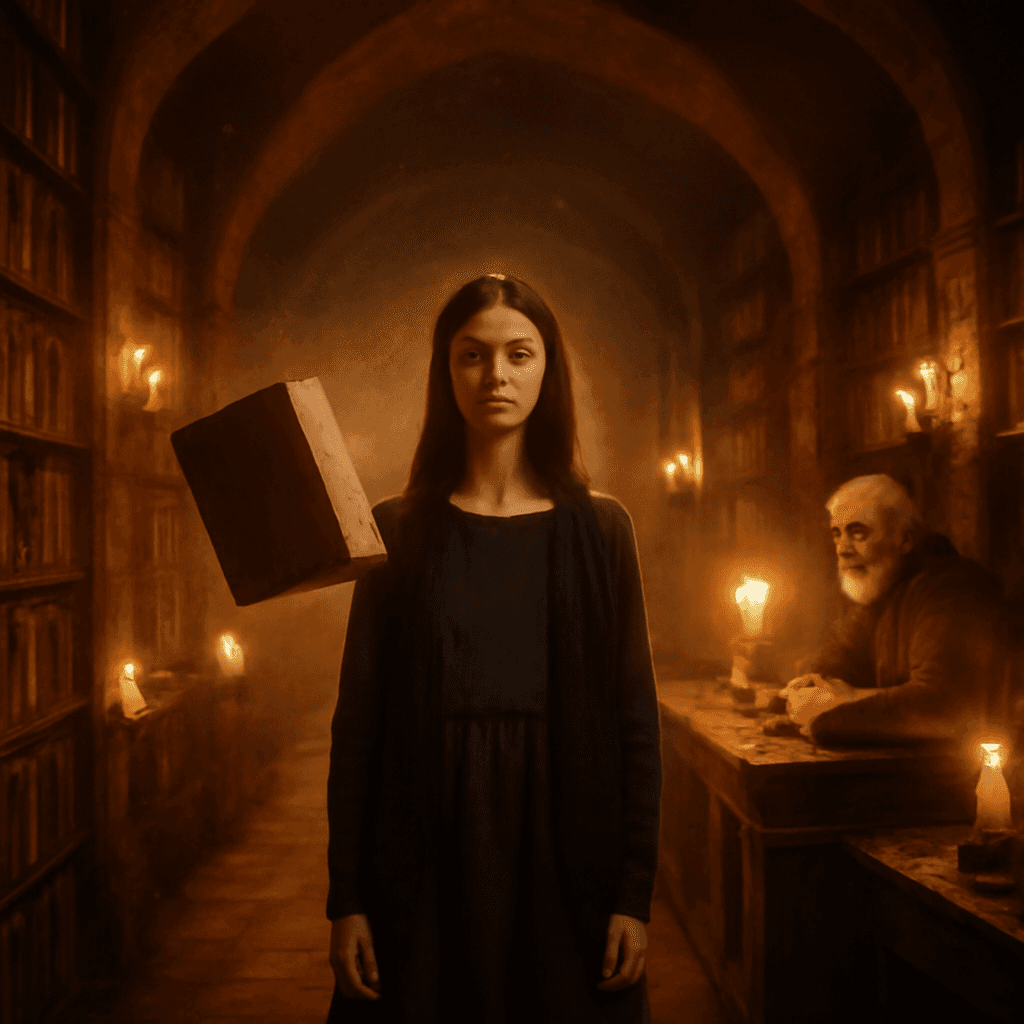
In the basement of an old building in the square, there was a library that wasn't on any map. It had no sign, no opening hours, and the doors opened only for some. Hana stumbled upon it by chance, escaping the rain. She descended the wet steps, pushed the heavy wooden door, and entered a room filled with books from floor to ceiling. It smelled of old paper, wood, and something sweet—like honey mixed with dust. At the table sat Helena, Eva's sister, wearing a smile that promised adventures. Loli, the family cat, curled up on a shelf, watching Hana with her green eyes. "Go ahead, but don't choose," Helena said, without lifting her gaze from the book in her hands. "What?" Hana was puzzled. "In this library, you don't choose books. Books choose you."
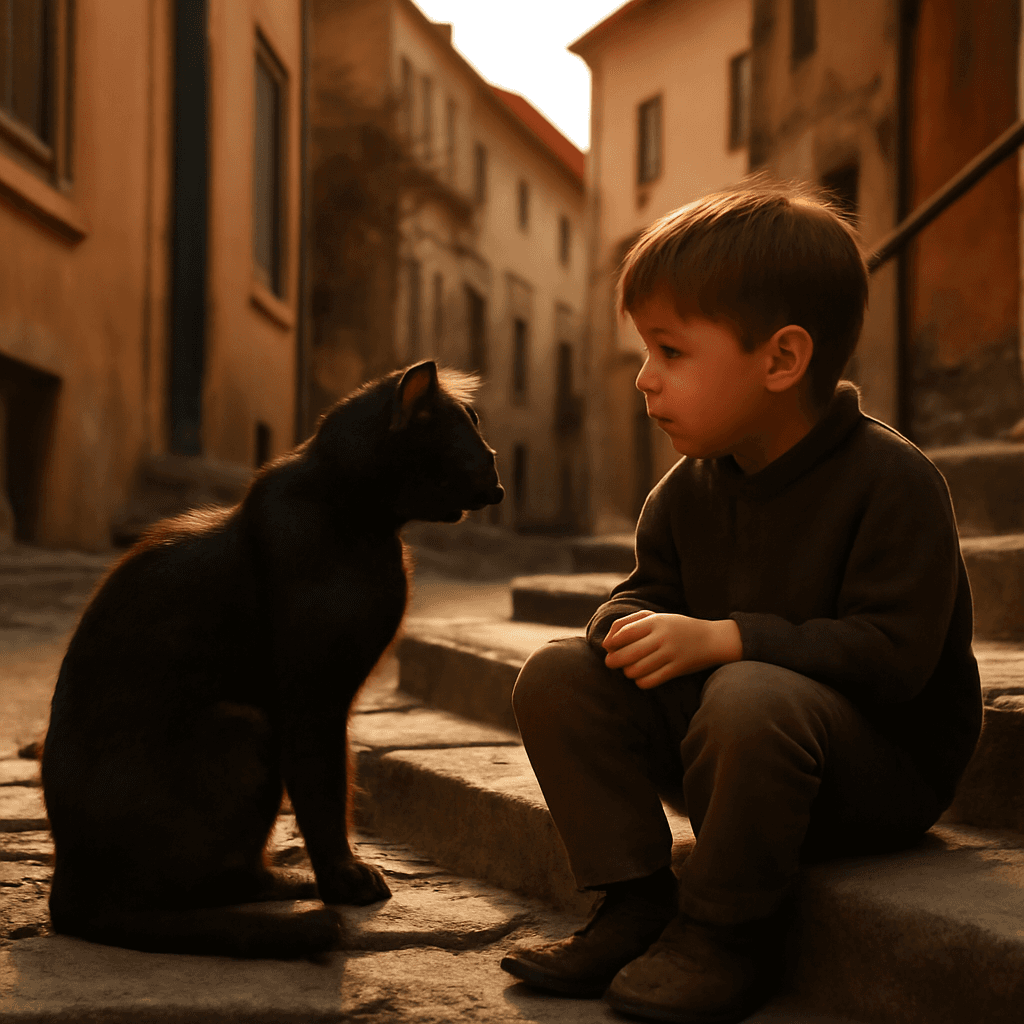
In the neighborhood by the river, there lived a dog that everyone called Jole. He was brown, with one white ear, and as far as anyone could remember, he had always been there. The old women claimed they remembered him from their childhood. "Impossible," the young ones said. "Dogs don't live that long." But Jole was different. He had a scar on his paw, limped on his hind leg, one eye was closed, and he had a knot on his tail. Each injury had its own story. Little Filip, who had just moved to the neighborhood and had no friends, sat every day on the steps in front of the building, watching Jole pass by. One day, the dog sat next to him and — Vito could swear — looked at him with that one eye as if he understood him. "Everyone says you've lived nine times," Filip whispered. "Is that true?" The dog barked. Old Mrs. Maria, who lived on the ground floor and had heard everything, opened her window and said, "Jole hasn't lived nine lives, boy. But nine times he almost died. And each time, he learned something people don't know..." From the window, Loli watched the scene with her green eyes, as if she knew the secret herself.
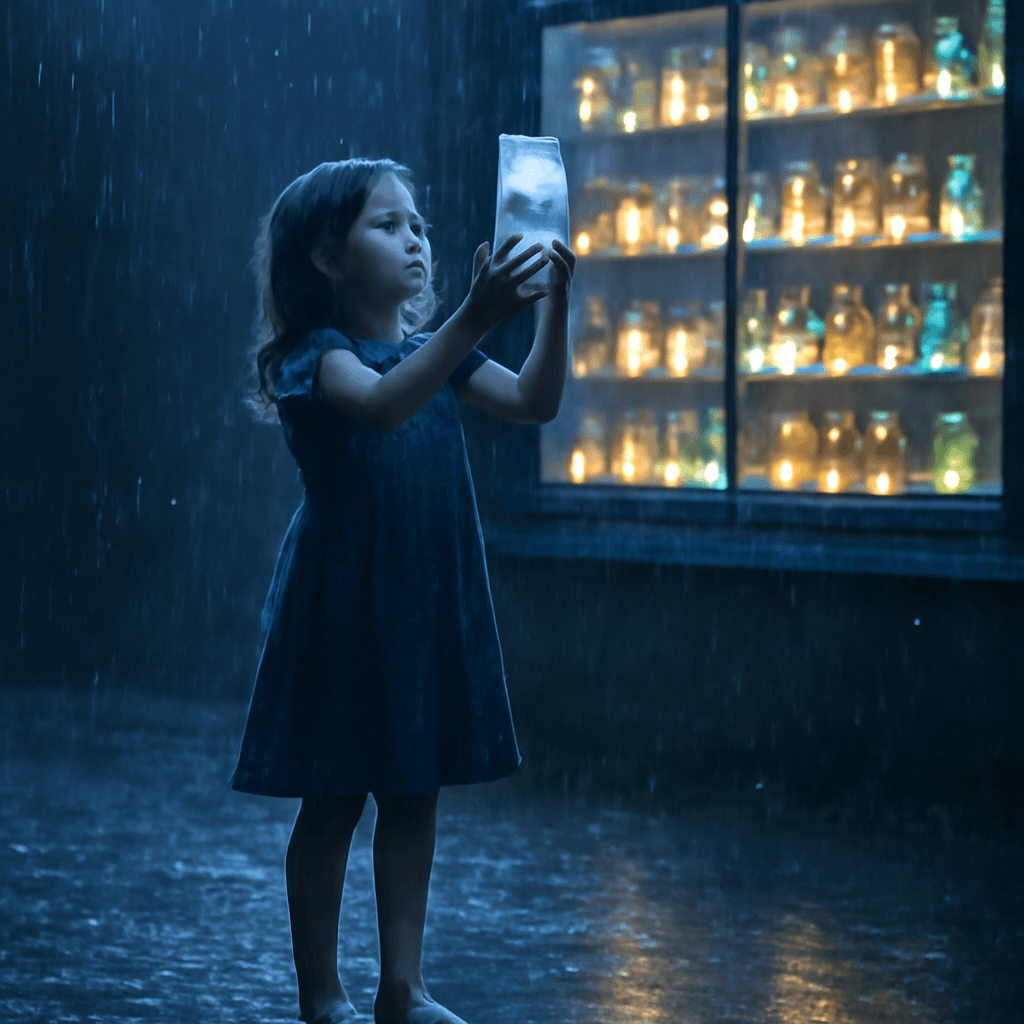
Hana had a peculiar habit. Every time it rained, she would rush into the yard with an empty glass jar and collect rainwater. On the shelves of her room stood more than a hundred jars, each marked with a date and a small label. "Hana, why do you collect rain?" her classmates asked at school, giggling. "It's just water!" But Hana knew something the others did not. Her grandmother Maria, who lived on a village island, had taught her this before she passed away. She had shared with Hana just one sentence — a sentence Hana never repeated to anyone. One day, the worst drought in fifty years struck the town. Parks turned yellow, fountains ran dry, and people waited in long lines for water. That evening, Hana sat on the floor of her room, surrounded by jars, and for the first time opened the oldest one — the jar she had filled with her grandmother on the last day they spent together. When she opened the lid, she caught a scent that stopped her in her tracks...
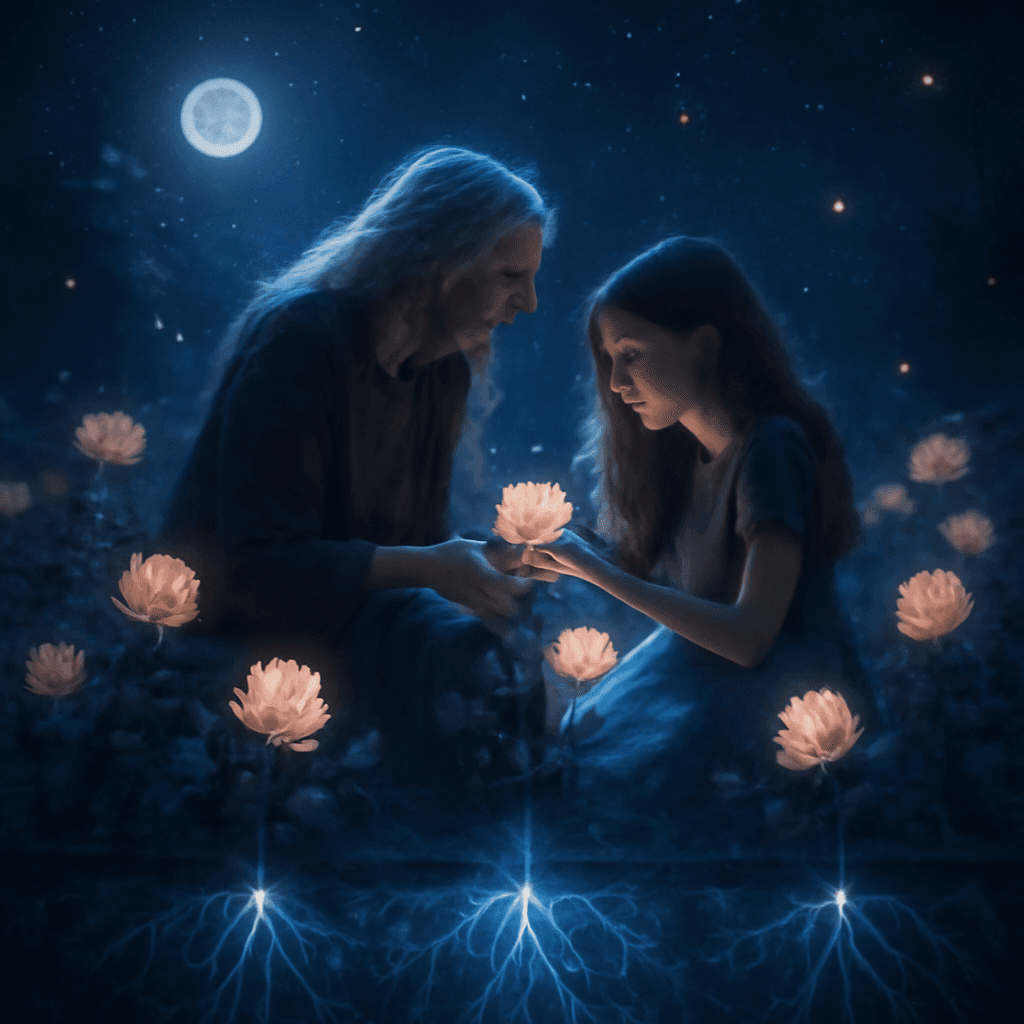
Maja was a girl who was afraid of the dark. Every night, when her mom turned off the light, Maja would dive under the blanket and wait for morning. But there was a peculiar old lady living on her street — Aunt Margareta — who had the most beautiful garden in the whole town. The problem was Aunt Margareta never worked in her garden during the day. Never. Neighbors whispered about it. "We saw her digging at midnight." "Planting flowers at three in the morning." "Watering roses under the stars." Everyone thought she was strange. One night, when Maja woke up at three a.m. and couldn’t sleep from fear, she looked out the window. She saw Aunt Margareta kneeling in her garden, hands in the soil, and — singing. The next morning, Maja knocked on her door. "Mrs. Rose, why do you work in the garden only at night?" The old lady looked at her with warm eyes and said, "Because at night, plants do something miraculous that people don't know. And when I show you, you'll never be afraid of the dark again."